The LIFE IP Duero project has worked to improve various hydromorphological aspects of the watercourses in its area of action.
In particular, a huge effort has been made in numerous actions to improve longitudinal and lateral connectivity along dozens of kilometres of watercourses.
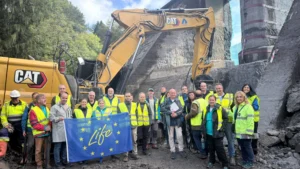
To improve longitudinal connectivity, dozens of kilometres of motes have been removed along the banks of the rivers Arevalillo and Zapardiel.
The aim is to connect the current riverbed, which has been greatly altered by decades of dredging and channel alteration, with the floodplain and secondary tributaries that can still be seen on the ground. The old channels are much more sinuous and have a greater variety of habitats, which favours the presence of more diverse biological communities.
In the Trabancos River, on the other hand, efforts have focused on promoting longitudinal connectivity, whereby a river maintains an adequate flow regime.
The loss of longitudinal connectivity in the Trabancos was caused by the presence of weirs disused.... and other artificial structures that prevented the circulation of water and sediment.